












Below, Manoush Zomorodi shares five key insights from her new book, Body Electric: The Hidden Health Costs of the Digital Age and New Science to Reclaim Your Well-Being.
Manoush is an award-winning journalist and host of NPR’s TED Radio Hour. Her “Body Electric” project was one of the largest public health studies of its kind. She has received two Gracie Awards for Best Radio Host and a Webby Award for Best Podcast Host.
What’s the big idea?
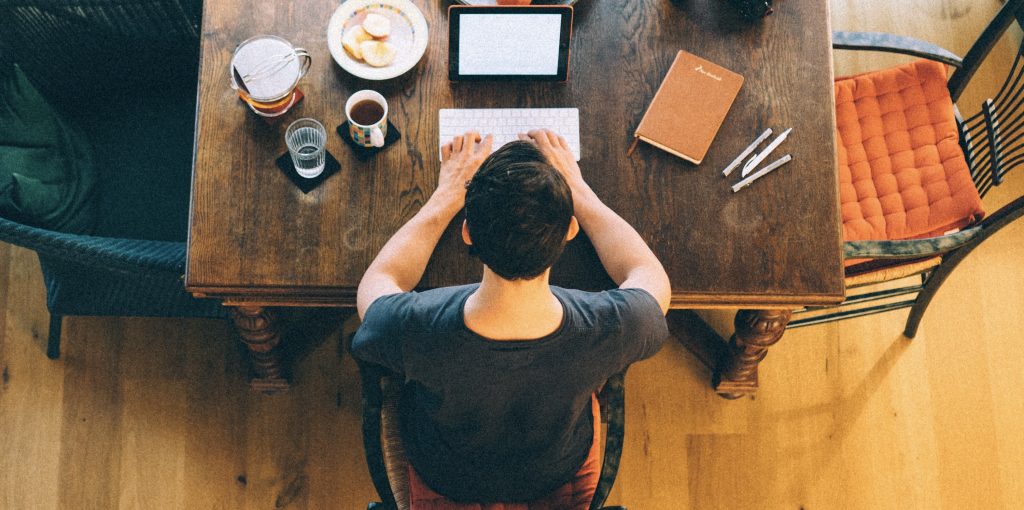
The next time your body whispers Please, just move, you should actually listen. It’s time to get up and rebel against a sedentary existence. We’re staring at screens for 10, 12, 14 hours a day. Our backs hurt, our brains feel foggy, and we’ve started to feel a little disconnected from our own bodies. How did we get here? New science shows what screens and chairs are costing us and how to find our way back to better health.
Listen to the audio version of this Book Bite—read by Manoush herself—in the Next Big Idea App, or buy the book.


1. Your morning workout can’t save you.
I have bad news for the runners, the spin-class devotees, and the 6 a.m. CrossFitters of the world: Your daily workout is not enough.
Here’s the math, courtesy of Keith Diaz, the Columbia University physiologist whose research is at the heart of my book. Even a solid hour at the gym is just four percent of your day. There’s a term, in the research world, for someone with this type of fitness routine: the active couch potato. Someone who exercises hard once a day, or just on weekends, but stays seated the rest of the time. Their risk of diabetes, heart disease, and early mortality is still elevated. Sitting is its own beast.
Before you say, “Fine, I’ll just stand at my desk all day,” I have to stop you. Standing desks are not the answer either. Unless they’re being used as a launch pad for actual movement, they don’t reduce your risk of heart disease or stroke. Stand still for too long, and you can develop varicose veins, low blood pressure, or even blood clots.
The villain isn’t the chair, exactly. It’s uninterrupted stillness—whether you’re sitting or standing. Your body needs movement distributed across the day.
2. The five-minute antidote.
If a workout isn’t the answer, what is? On a chilly morning in 2023, I was walking my dog and heard my NPR colleague Allison Aubrey reporting on a study that, ironically, stopped me in my tracks.
There was a scientist named Keith Diaz at Columbia who’d identified an antidote to all that sitting: A five-minute walk, every half hour, at two miles per hour. So, basically a stroll.
“Even one minute of movement every hour reduces your blood pressure.”
In his lab, that simple cadence reduced post-meal blood sugar spikes by about 60 percent, making it as effective as diabetes medication. It also lowered blood pressure by 4 to 5 points, which is the kind of result you’d expect from an intense workout.
Could it really be that easy? I emailed Keith, and he wrote back quickly. He’d basically decided his findings were a dead end. He didn’t think regular humans could pull this off in the real world. “I can tell you what’s optimal,” he said about lab studies, “but can anybody actually do it?”
I refused to believe it wasn’t feasible. So, we joined forces. My team at NPR and Keith’s lab ran a study with our podcast listeners: 20,000 people, from all 50 states and 74 countries. Columbia’s servers crashed within hours of opening signups. People wanted this.
Here’s how it worked. After a baseline week, participants picked a dose: a five-minute walk every 30 minutes, every 60 minutes, or every two hours, whatever they could fit into their lives. The results were honestly remarkable. Even people who only managed four or five breaks a day, not the full prescribed dose, still saw real benefits. Even one minute of movement every hour reduces your blood pressure.
Plus, people reported getting more done on the days they took their breaks. About four percent more work, at slightly higher quality. So much for the idea that interrupting yourself wrecks your productivity. Stepping away from the desk made people sharper when they came back.
3. Your mood lives in your muscles.
When we surveyed our 20,000 participants about what they liked, the thing they wouldn’t stop talking about was how the breaks made them feel. They felt less foggy. Less cranky. Energized at the end of the workday. 82 percent said they liked it. Fatigue levels dropped by as much as 28 percent on the days they kept moving.
“Find little joys in the change, and soon the numbers and how you feel will be motivation enough.”
Take Dana. Dana was one of our participants, a Type 2 diabetic, on insulin when the study started. She dusted off the treadmill she’d bought during the pandemic and moved it so she could look at the flowers blooming outside her home office window. Every 30 minutes, her timer would ping, and she’d step away and walk for five minutes. She resisted at first. It felt counterintuitive to interrupt herself when she had work to do. But she kept going. And at some point, she told me, the cloud in her brain kind of dissipated.
When I checked in with Dana six months after the study wrapped up, she was still taking her breaks. Her blood sugar had dropped into the prediabetic range. She was tapering her insulin. Her cholesterol was perfect. And her wisdom, which I now pass on to you: it may suck at first to change your habits, but find little joys in the change, and soon the numbers and how you feel will be motivation enough.
There’s beautiful science underneath Dana’s story. When you contract your muscles, they release chemicals that travel to your brain. Your muscles help regulate your mood, focus, and energy.
4. We’ve lost our inner selfie.
Which brings me to a word you may not have heard: interoception. It’s the sense that helps you tune in to what’s happening inside your body. The pounding heart. The tight shoulders. The stomach saying its hungry. The brain calling out for a break. Dr. Sahib Khalsa, the neuroscientist who introduced me to interoception, calls it “an inner selfie.” It’s how you know what you need.
And here’s the bad news: technology is dulling this sense for all of us. A 2023 University of Bern study put accelerometers on healthy adults for a week and pinged their phones at intervals to ask how aware they were of their bodies. After 30 minutes of sitting and looking at a screen, most people were noticeably less in touch with their physical selves. After just 10 minutes of movement, that awareness came roaring back. The researchers concluded that excessive screen time interferes with our embodied experience within the world.
Have you ever scrolled for an hour and looked up to realize you’re starving, need to pee, your back is screaming, and you’re somehow both wired and exhausted? This is the deepest reason movement breaks work beyond the blood sugar, beyond the blood pressure, and beyond the mood. They put your brain back in your body. They re-establish the conversation you’ve been letting tech drown out.
5. The tiny rebellion.
Your office, your school, your commute, your living room—they were all designed around the chair. By 1950, nearly a quarter of all U.S. jobs were already sedentary. And by 2019, office workers were spending 90 percent of their time parked at a desk. Sitting is the path of least resistance, and your phone makes it worse, because it gives you what one Body Electric participant called “infinity at your fingertips, and very little grounding in return.”
The fix has to happen on two levels. The big one is cultural. We need workplaces and schools to redesign around movement. Sweden has a tax-free wellness allowance. Japan has radio calisthenics built into the workday. The U.S. has no federal mandate that you even get a lunch break.
“We need workplaces and schools to redesign around movement.”
But while we wait for the big stuff, you can stage tiny rebellions. One Body Electric participant told me about a coworker at his old company who would shout “FIT BREAK!” down the hallway three times a day, and everyone would stop to walk, stretch, or do jumping jacks. Be the goofball who yells “FIT BREAK!”
Schedule meetings for 25 minutes instead of 30. Walk to a colleague’s desk instead of Slacking them. Move your treadmill so it faces a window. Take the call standing up. These breaks are small acts of mutiny against a culture that wants you parked. And they will get you back in touch with what your body has been quietly trying to tell you all along.
Enjoy our full library of Book Bites—read by the authors!—in the Next Big Idea App: